Homemade Dog Food Recipe: A Simple Weekly Meal Prep Guide
If you’ve ever looked at the ingredients list on a bag of commercial dog food and felt a little uneasy, you’re not alone. More and more dog owners are turning to homemade dog food as a way to know exactly what their pup is eating. And the good news is that making your own dog food doesn’t have to be complicated or time-consuming.
This guide walks you through a simple, vet-friendly base recipe you can batch cook once a week and customize with different proteins to keep things interesting for your dog. Think of it as meal prep, but for your pup.
Is Homemade Dog Food Actually Better?
It can be, but it depends on how you do it. The biggest risk with homemade dog food is nutritional imbalance. Dogs have specific needs for protein, fat, carbohydrates, vitamins and minerals, and it’s easy to accidentally leave something out when cooking from scratch.
That said, a well-constructed homemade recipe using whole, balanced ingredients can absolutely be a healthy choice. The key is to keep it simple, rotate your proteins and use a recipe that covers your dog’s core nutritional bases.
This recipe is designed as a supplement or partial replacement for commercial food rather than a complete standalone diet. If you want to transition your dog fully to homemade food, that’s a conversation to have with your vet, who can recommend a complete and balanced formulation for your dog’s specific size, age and health needs.
The Base Recipe
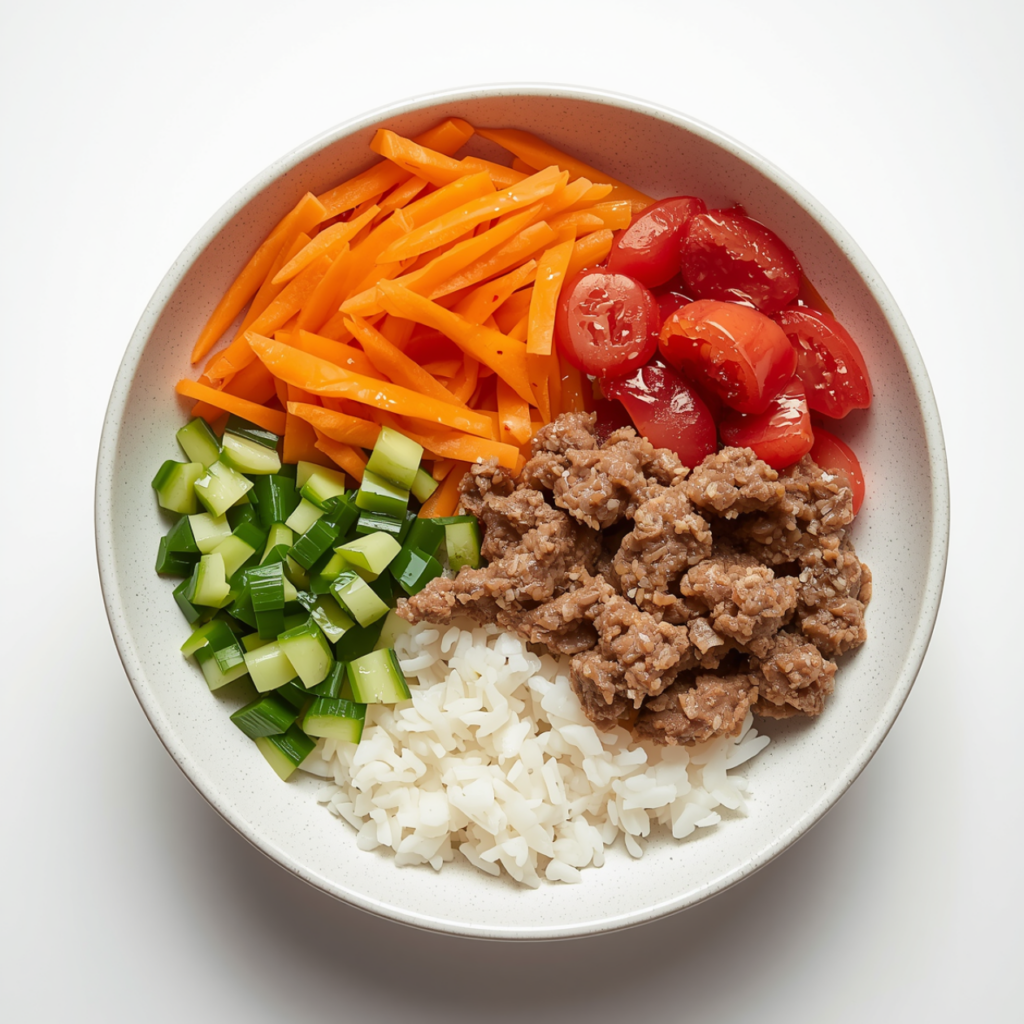
This is a straightforward, balanced base that works for most healthy adult dogs. It uses lean protein, a complex carbohydrate, dog-safe vegetables and a small amount of healthy fat. Everything is cooked plain with no seasoning.
Makes approximately 6 cups, enough for a medium dog for 3 to 4 days.
Ingredients
Protein (pick one):
- 1.5 lbs lean ground beef (90% lean or higher)
- 1.5 lbs ground turkey
- 1.5 lbs boneless skinless chicken breast or thighs, diced
- 1.5 lbs salmon fillet, skin removed and diced
Carbohydrate (pick one):
- 2 cups cooked brown rice
- 2 cups cooked white rice
- 2 cups cooked sweet potato, cubed
Vegetables (use all three):
- 1 cup carrots, finely diced or shredded
- 1 cup green beans, chopped
- 1 cup peas (fresh or frozen, not canned)
Extras:
- 1 tablespoon olive oil or fish oil
- 2 large eggs, scrambled plain (optional but adds great nutrition)
Instructions
- Cook your chosen protein in a large skillet or pot over medium heat until fully cooked through. If using ground beef or turkey, drain any excess fat. If using chicken or salmon, make sure there are no pink parts remaining.
- While the protein cooks, prepare your carbohydrate according to package instructions if using rice, or boil and cube sweet potato until fork-tender.
- Steam or lightly boil the carrots, green beans and peas until soft. Dogs digest cooked vegetables much better than raw, so don’t skip this step.
- If adding eggs, scramble them plain in a dry pan with no butter or oil and cook until fully set.
- Combine the cooked protein, carbohydrate, vegetables and eggs in a large bowl. Add the olive oil or fish oil and mix everything together until well combined.
- Let the mixture cool completely before portioning and storing.
Storage
- Fridge: Store in an airtight container for up to 4 days.
- Freezer: Portion into individual serving sizes and freeze for up to 2 months. Thaw overnight in the fridge before serving.
Silicone muffin trays or zip-lock freezer bags work great for portioning individual servings before freezing.
How Much to Feed Your Dog
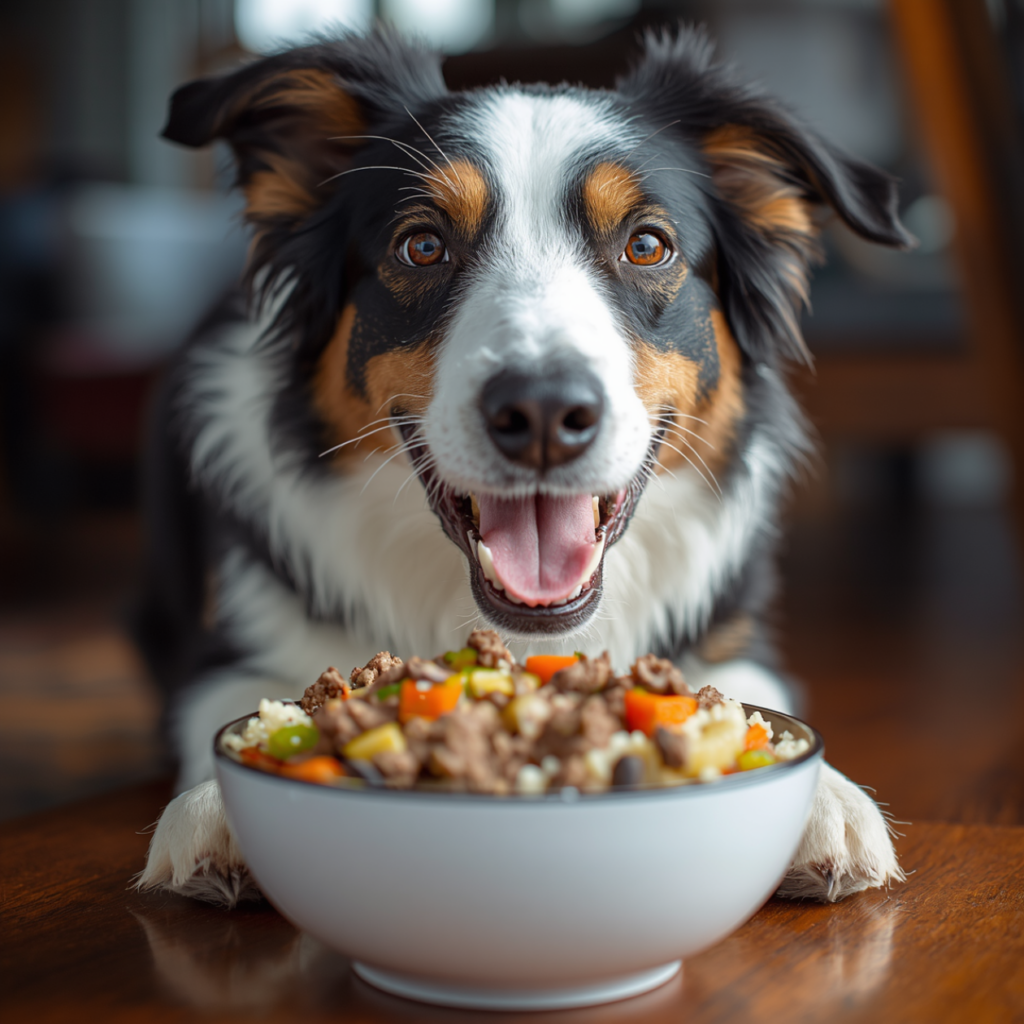
This will vary depending on your dog’s size, age, activity level and whether you’re using this as a full meal or a partial replacement alongside commercial food.
A general starting guideline for homemade food as a full meal:
| Dog Size | Weight | Daily Amount |
|---|---|---|
| Small | Under 20 lbs | 0.5 to 1 cup per day |
| Medium | 20 to 50 lbs | 1 to 2 cups per day |
| Large | 50 to 80 lbs | 2 to 3 cups per day |
| Extra Large | 80+ lbs | 3 to 4 cups per day |
Split the daily amount into two meals if possible. Monitor your dog’s weight over the first few weeks and adjust portions up or down as needed. Every dog is different, and these are starting points rather than hard rules.
Protein Swap Guide
One of the best things about this recipe is how easy it is to rotate the protein. Variety keeps meals interesting for your dog and helps ensure a broader range of nutrients over time.
Chicken is lean, easy to digest and a great starting point, especially if your dog has a sensitive stomach. It’s also one of the most affordable options.
Turkey is similar to chicken in terms of digestibility and is a good alternative if your dog has a chicken sensitivity.
Lean ground beef adds more iron and zinc than poultry and most dogs love the flavor. Stick to 90% lean or higher to keep the fat content reasonable.
Salmon is the star choice for coat health. It’s rich in omega-3 fatty acids, which support skin, coat, joints and brain function. Use it once a week or every other batch for a real nutritional boost. Make sure all bones are removed before cooking.
You can also mix proteins within a batch. Half chicken and half salmon, for example, is a popular combination that balances lean protein with healthy fats.
Vegetables to Use and Avoid
Safe vegetables for dogs:
- Carrots
- Green beans
- Peas
- Sweet potato
- Zucchini
- Broccoli (small amounts)
- Spinach (small amounts)
- Cucumber
Vegetables to avoid:
- Onion and garlic (toxic to dogs, even in small amounts)
- Leeks and chives (same family as onion and garlic, also toxic)
- Avocado (contains persin, which is harmful to dogs)
- Raw potatoes (cooked plain white or sweet potato is fine)
- Mushrooms (some varieties are toxic; best to avoid altogether)
When in doubt, leave it out. The base recipe vegetables (carrots, green beans and peas) are safe, well-tolerated and widely available.
Adding Supplements
If you’re using this recipe as a significant portion of your dog’s diet rather than just an occasional treat or topper, you may want to consider adding a canine multivitamin or specific supplements to fill any nutritional gaps. Common ones include:
- Calcium: Homemade diets can be low in calcium without bone meal or a supplement. This is especially important for large breeds and growing dogs.
- Fish oil: Great for coat and joint health. Already included in this recipe via olive oil or fish oil, but a dedicated omega-3 supplement can be added too.
- A canine multivitamin: A simple way to cover your bases, especially if you’re transitioning fully to homemade food.
Talk to your vet about which supplements make sense for your specific dog.
Frequently Asked Questions
Can I feed my dog this recipe every day? Yes, as long as you’re monitoring their weight and overall health and rotating the protein regularly. For dogs with specific health conditions, check with your vet before making any major diet changes.
Do I need to add salt or seasoning? No. Dogs do not need added salt, pepper, herbs or any other seasoning. Their taste buds work differently from ours and they’re perfectly happy with plain food. Seasoning can actually be harmful, particularly garlic and onion powder which are toxic.
My dog won’t eat the vegetables. What should I do? Try pureeing or mashing the vegetables and mixing them into the protein so they’re less noticeable. Most dogs will eat vegetables happily when they’re mixed into something tasty. You can also try switching up the vegetable selection to find ones your dog prefers.
Can I use canned vegetables? Fresh or frozen vegetables are best. Canned vegetables often contain added salt, which you want to avoid. If you do use canned, look for low-sodium or no-salt-added versions and rinse them well before using.
Can puppies eat this recipe? Puppies have different nutritional needs than adult dogs, particularly higher protein and calcium requirements for healthy growth. This recipe is designed for healthy adult dogs. If you want to feed homemade food to a puppy, consult your vet for a puppy-specific formulation.
This recipe is intended as a guide and is not a substitute for professional veterinary nutritional advice. Every dog has different needs based on their age, breed, size, activity level and health status. Always consult your veterinarian before making significant changes to your dog’s diet, particularly if your dog has existing health conditions.